By Kate Galbraith
Idaho has lately made a strong showing in energy efficiency: the state was rated “most improved” in a recent energy-efficiency survey, and also topped a Pew survey last month for fastest green job growth.
Diego Giudice/Bloomberg News
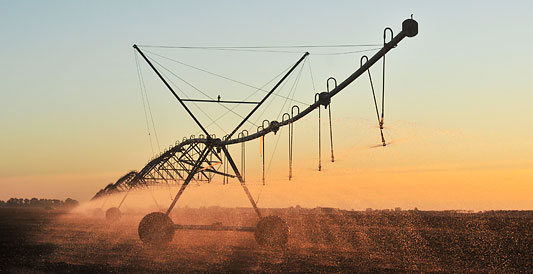
One innovative program that Idaho is pursuing is paying several hundred farmers to not water their crops on some late afternoons, when the demand for electricity is at its peak. The savings come from not using electric pumps, which consume a great deal of energy ferrying water from, say, a river to a plateau. The Idaho Power Company estimates that on a hot summer afternoon, it can save slightly more than 5 percent of its electric demand.
"You can actually seek the peak drop off when the program kicks in," said Ric Gale, the vice president for regulatory services at Idaho Power.
"This isn’t some pie-in-the-sky thing," he added. "This is something that actually delivers."
Some experts say that irrigating in the late afternoons is inefficient anyway, because some of the water will evaporate in the heat of the day. Sid Erwin, who farms alfalfa and other crops in southern Idaho and is vice president of the Idaho Irrigation Pumpers Association, pointed out that most local farms — including his — ran their pumps 24 hours a day. There is not enough evaporation to justify paying to send a worker to turn off the pumps in the afternoon, he said.
But with the power company paying, the calculus changes. Mr. Erwin estimates that he could save upwards of $10,000 from the program — out of a $40,000 annual pumping bill. That, he said, should be enough to " pay a man or two or three men " to make sure the pumps are properly turned off and on.
Terry Ketterling, a central Idaho farmer who is also participating, said that if the program enabled Idaho to not need more power plants to meet peak demand, it would save him money in the long run (in addition to the direct incentives for participating). "I know it’s at my expense whenever they do "build more plants, he said.
Quentin Nesbitt, an agricultural engineer with Idaho Power, noted that farmers can be asked for a maximum watering restriction of 15 hours a week. But he added, "We typically hope for less than that" to avoid being hugely disruptive to farmers.
Some California utilities have similar programs, as does Rocky Mountain Power.